
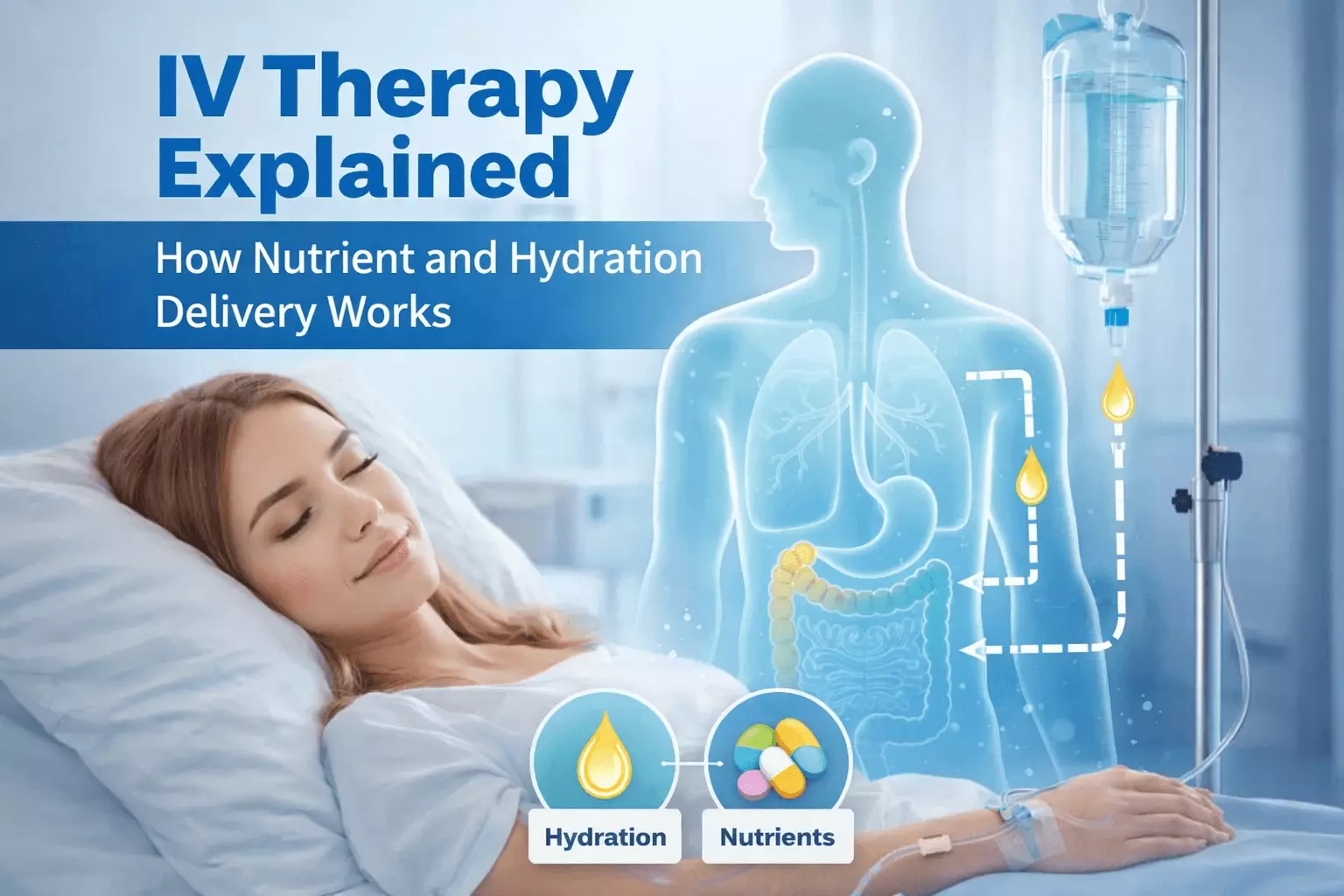
Intravenous (IV) therapy has long been a standard medical practice for delivering fluids and medications in clinical settings. In recent years, it has also gained attention within wellness contexts as individuals seek efficient ways to support hydration and nutrient balance.
To understand IV therapy’s role in wellness, it’s important to examine how it works, when it may be used, and the considerations that determine responsible administration.
What Is IV Therapy?
IV therapy involves delivering fluids, vitamins, minerals, or medications directly into the bloodstream through an intravenous line. By bypassing the digestive system, IV delivery allows immediate absorption and distribution throughout the body.
In medical settings, IV therapy is commonly used to:
- Treating dehydration
- Delivering medications
- Support patients unable to consume fluids orally
In wellness settings, IV therapy is discussed in relation to hydration support, fatigue management, and nutrient replenishment.
How IV Therapy Works in the Body
When fluids and nutrients enter the bloodstream intravenously, they are transported directly to tissues and organs. This differs from oral intake, where absorption can be affected by digestion, metabolism, and gastrointestinal health.
Typical IV therapy formulations may include:
- Saline or electrolyte solutions
- B-complex vitamins
- Vitamin C
- Minerals such as magnesium
Each formulation is selected based on individual needs and wellness goals.
Common Wellness-Related Uses of IV Therapy
Hydration Support
IV therapy is often associated with hydration support, particularly for individuals experiencing dehydration related to illness, heat exposure, travel, or physical exertion.
Hydration-focused IV treatments aim to restore fluid balance efficiently when oral intake may be insufficient.
Fatigue and Low Energy
Fatigue can result from dehydration, nutrient depletion, or demanding lifestyles. IV therapy is sometimes used by individuals seeking short-term hydration or nutrient support as part of a broader wellness routine.
It is important to note that IV therapy is not a cure for chronic fatigue or underlying medical conditions.
Nutrient Absorption Challenges
Some individuals experience difficulty absorbing nutrients through diet or supplements. Because IV therapy bypasses digestion, it may be considered in cases where nutrient delivery through oral means is limited.
Safety Considerations and Medical Oversight
From an expert perspective, the safety of IV therapy depends on proper screening, appropriate formulation, and professional administration. Responsible providers review medical history, identify contraindications, and ensure sterile procedures.
IV therapy should not be positioned as a replacement for medical treatment or diagnosis. Instead, it functions as a supportive option within clearly defined boundaries.
Clinical vs. Mobile IV Therapy Settings
Traditionally, IV therapy has been administered in hospitals and clinics. Today, mobile IV therapy providers deliver similar treatments in non-clinical settings such as homes or offices.
In the wellness sector, mobile IV therapy providers such as Pure IV illustrate how IV delivery methods are being adapted for convenience while maintaining professional oversight and standardized procedures.
For individuals seeking hydration or nutrient support at home, mobile IV therapy services provided by Pure IV offer access to IV treatments without requiring clinic visits.
When IV Therapy May Be Considered
IV therapy may be considered by individuals who:
- Experience persistent dehydration symptoms
- Have difficulty maintaining hydration orally
- Prefer convenient wellness services
- Seek hydration or nutrient support during demanding periods
Consultation with qualified professionals remains essential before pursuing IV therapy.
Expert Perspective on Responsible Use
From an expert standpoint, IV therapy should be approached as part of a broader wellness strategy. Clear patient education, transparency regarding benefits and limitations, and appropriate medical oversight are critical to responsible use.
When delivered appropriately, IV therapy can complement — but not replace — foundational health practices such as proper nutrition, hydration, and medical care.
Final Thoughts
IV therapy combines established medical delivery methods with evolving wellness preferences. By delivering fluids and nutrients directly into the bloodstream, it offers an efficient option for hydration and nutrient support when used responsibly.
As interest in IV therapy grows, understanding how it works and when it is appropriate helps individuals make informed decisions aligned with their overall health goals.